Realize Live Americas 2024
Discover the latest in MBD & MBE at Realize Live Americas 2024 with Capvidia. Learn about model-based workflows and industry advancements at Booth...
Capvidia 2026 R1 strengthens MBD readiness, QIF workflows, STEP AP242 support, inspection automation, and digital thread workflows across the product suite.
Capvidia, a provider of Model-Based Definition (MBD), Model-Based Enterprise (MBE), and CAD interoperability software, today announced Capvidia 2026 R1, the latest version of its software portfolio for manufacturers, OEMs, suppliers, and quality organizations.
Built with more than 5,600 development hours, Capvidia 2026 R1 includes a combination of over 400 new features, improvements, customer-requested enhancements, and bug fixes across the Capvidia product portfolio. The release helps manufacturers make model-based workflows more practical, validated, and automation-ready.
Capvidia 2026 R1 introduces MBDReady Check inside MBDConnect for Creo, expands QIF-based Weld Analysis for Siemens NX, improves Bill of Characteristics and 2D ballooning workflows in MBDVidia, strengthens semantic recognition for machine-readable inspection data, and adds STEP AP242 Edition 3 support.
Capvidia continues to help OEMs and suppliers build a stronger digital thread using MBD, QIF, and automation-ready workflows.
The release supports Capvidia’s focus on True MBD: model-based data that is not only human-readable, but also machine-readable and ready for downstream use across design, manufacturing, quality, and supplier workflows.
“Manufacturers do not simply need more 3D data. They need model-based data that is complete, validated, interoperable, and ready for downstream use,” said Tomasz Luniewski, CEO at Capvidia. “With the 2026 R1 release, Capvidia continues to help OEMs and suppliers build a stronger digital thread using MBD, QIF, and automation-ready workflows.”
For manufacturers adopting MBD and MBE, Capvidia 2026 R1 helps reduce validation loops, preserve engineering intent, improve supplier communication, and move more product data into machine-readable workflows that support automation across design, manufacturing, and quality.
MBDReady Check for Creo
The headline feature in Capvidia 2026 R1 is MBDReady Check inside MBDConnect for Creo.
Previously, users creating annotations in Creo often had to export a model, open it in MBDVidia, run MBDReady Check, review flagged annotations, return to Creo, fix issues, export again, and repeat the process. With 2026 R1, that validation loop is reduced.
MBDReady Check can now be accessed directly inside the Creo plugin. It can be used as a standalone option or included within the engineering checker, allowing teams to check whether models are machine-readable earlier in the authoring process.
The workflow helps users identify flagged annotations, review references, and repair certain issues directly from Creo. This keeps the digital thread intact from authoring through downstream use.
For OEMs, this supports stronger control of design intent and more reliable publishing of MBD-ready data. For suppliers, it increases confidence that received models contain usable, validated, machine-readable information for quoting, planning, inspection, and reporting.
Weld Analysis for Siemens NX
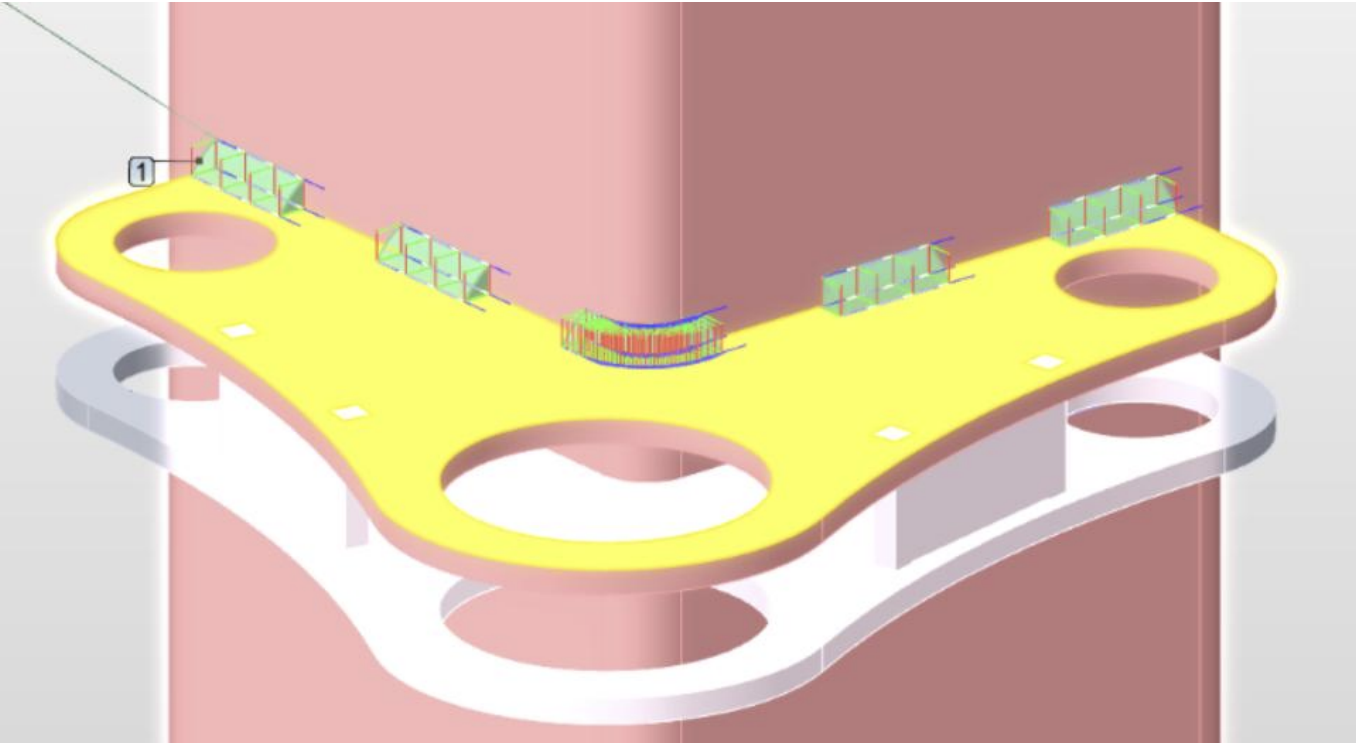
Capvidia 2026 R1 also expands QIF-based Weld Analysis for Siemens NX. Weld analysis data exported from NX can now be carried through QIF and visualized in MBDVidia. Users can review weld features, weld symbols, weld paths, weld vectors, and related weld information in a structured model-based environment.
Within MBDVidia, welds are populated into dedicated tabs and represented in the model tree. Users can select welds, highlight the surfaces that need to be welded, and visualize weld paths and vectors that show how the weld is intended to be created.
Weld path information, including sampling points, is stored in QIF so the data can be preserved and reused beyond the original CAD environment. This gives manufacturing and quality teams reusable weld data for planning, simulation, robotic offline programming, and downstream automation.
Instead of weld requirements being trapped in drawings, notes, or disconnected files, weld paths and related information can become part of a reusable model-based data package for OEM-supplier collaboration.
MBDVidia and Inspection Workflow Improvements
Capvidia 2026 R1 improves the Bill of Characteristics and 2D ballooning workflows in MBDVidia. Users can now set measurement result types as numerical or PASS/FAIL across BoC rows, group BoC rows by annotation, and filter BoC data by saved view, drawing zone, feature name, annotation name, tolerance value, criticality, and measurement device.
These updates help quality teams and suppliers manage complex inspection requirements, repeated features, and first article inspection deliverables. The release also improves 2D ballooning readability by allowing users to highlight specific balloons or rows within complex PMI annotations.
Capvidia 2026 R1 also strengthens semantic interpretation of engineering requirements, including recognition for pattern-based requirements such as “individually.” This allows datum patterns and repeated features to be interpreted as separate semantic characteristics instead of a single feature.
A new Zone Boundary Check in MBDReady Check helps users identify annotations that reference zone boundaries not defined on the model, improving machine readability before downstream release.
STEP AP242 Edition 3 Support
Capvidia 2026 R1 adds STEP AP242 Edition 3 support in MBDVidia. Users can now read and write STEP AP242 Edition 3 files directly in MBDVidia. The STEP export process also gives users more control over the STEP edition and application protocol during export.
Together with QIF support, MBD validation, CAD connectivity, inspection data management, and enterprise automation, STEP AP242 Edition 3 support strengthens Capvidia’s standards-based approach to MBD and digital thread implementation.
Across more than 400 updates, Capvidia 2026 R1 reflects continued investment in practical MBD adoption, customer-requested improvements, and software quality. The release includes updates across MBDVidia, MBDConnect for Creo, MBDConnect for NX, FormatWorks, CompareVidia, Pundit CMM, license server tools, and enterprise server products.
Availability
Capvidia 2026 R1 is available now to customers. Customers can obtain the latest product upgrades through Capvidia’s download portal.
To learn more about Capvidia 2026 R1, request a demo, or speak with the Capvidia team about MBD, QIF, STEP AP242, CAD validation, or digital thread implementation, visit www.capvidia.com.
About Capvidia
Capvidia provides software for Model-Based Definition, Model-Based Enterprise, CAD validation, QIF interoperability, and digital thread automation. Its products help manufacturers create, validate, exchange, and reuse machine-readable engineering data across design, manufacturing, and quality workflows.
Capvidia helps OEMs and suppliers reduce manual interpretation, improve quality, and build practical model-based workflows for Industry 4.0 and digital transformation.
jimmy@capvidia.com
Phone: 1-832-280-8685
Discover the latest in MBD & MBE at Realize Live Americas 2024 with Capvidia. Learn about model-based workflows and industry advancements at Booth...
Discover MBD Ready Check in MBDConnect for Creo 2026 R1, combining semantic PMI validation with Engineering Checker to catch issues before downstream...
Capvidia, known for broad support of MBD across its product line, has developed a product to help serious Creo users more effectively make MBD-ready...